

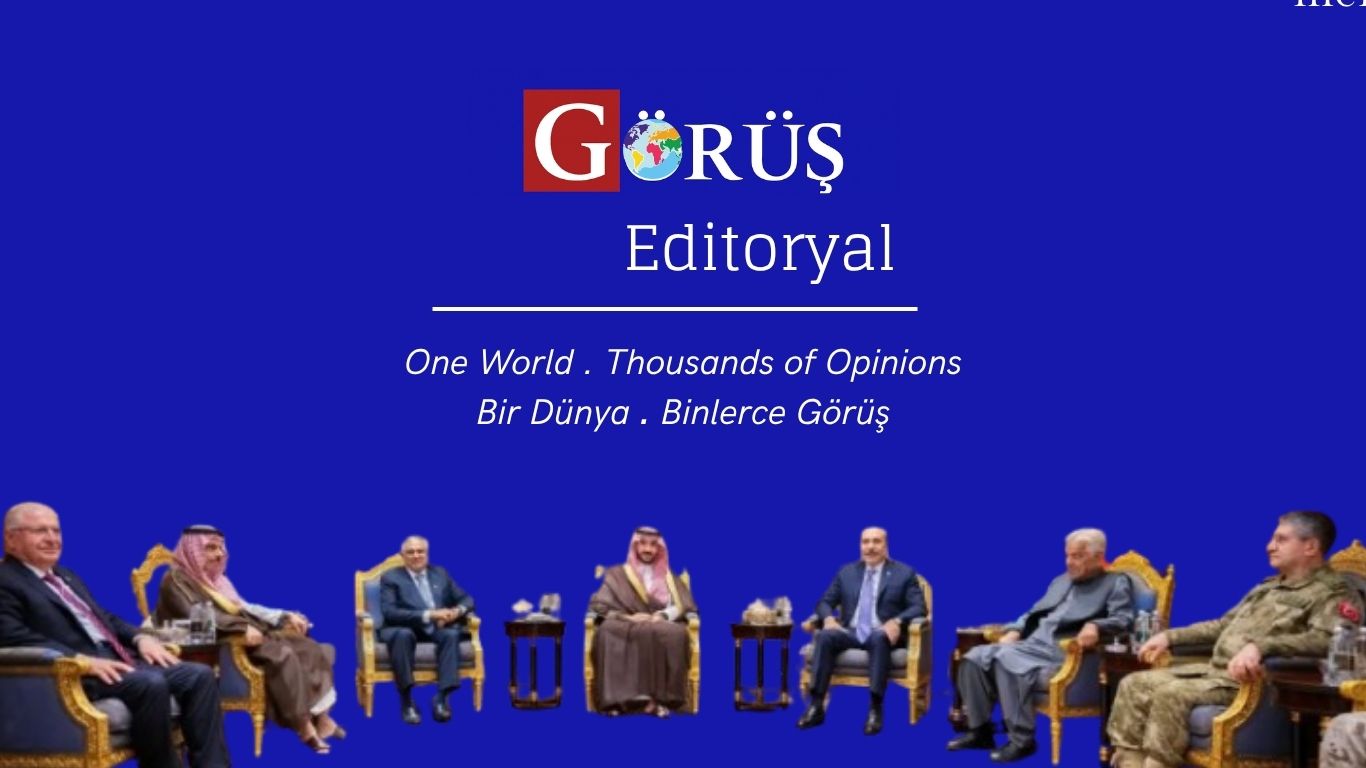
- A last minute development: what actually happened in Tehran? The verified development
On 26 October 2026, senior representatives of Iran, Saudi Arabia, Türkiye and Pakistan met in Tehran to discuss regional security and the escalating conflict involving Iran, the United States and Israel.
The meeting was reported by Reuters and confirmed in reporting by other news organisations. The delegations included Saudi Defence Minister Prince Khalid bin Salman, Pakistani army chief Field Marshal Asim Munir and Turkish intelligence chief İbrahim Kalın. Iran hosted the talks. Reuters
The meeting is particularly significant because Saudi Arabia, Türkiye and Pakistan had signed the Mecca mutual defence agreement in August 2026. The three countries subsequently engaged directly with Iran, a country whose relationship with Saudi Arabia has long been marked by strategic rivalry and serious security tensions. euronews
The four countries agreed to continue their dialogue on regional cooperation, peace and security. The available joint statement does not establish that they reached a comprehensive peace agreement or created a new regional security organisation. PressTV
That distinction matters enormously.
The meeting is a documented diplomatic development. The claim that it marks the beginning of a fundamental transformation of the Middle East remains a hypothesis to be examined.
Why this matters now
The timing is crucial. The regional conflict has affected not only Iran but also Saudi Arabia and Yemen, while tensions surrounding the Strait of Hormuz have created wider economic and security concerns.
The diplomatic initiative therefore reflects a shared interest in preventing further escalation, even among countries whose strategic objectives are not identical. Reuters' reporting also highlights the continuing importance of negotiations involving Washington and Tehran. Reuters
There is, in other words, a substantial story here—independent of whether we accept the commentator's interpretation.
2. My geopolitical analysis: Five important dimensions
I. A possible shift from external security dependence towards regional diplomacy
This is, in my assessment, the most important analytical dimension.
For decades, the security architecture of the Gulf has relied heavily on American military power, American security guarantees and the presence of US forces in the region.
The commentator argues that the current conflict has exposed the limitations of this arrangement. In his interpretation, regional governments are beginning to recognise that their security cannot be guaranteed simply by relying on Washington.
This is a plausible hypothesis, but it needs careful qualification.
The Tehran meeting demonstrates that regional powers are willing to engage Iran directly despite their other defence commitments. It does not, by itself, demonstrate that Saudi Arabia or Türkiye intends to abandon its existing security partnerships.
Indeed, the Mecca defence agreement and the diplomatic outreach to Tehran may be complementary rather than contradictory.
The countries involved could be pursuing two objectives simultaneously:
- Strengthening their ability to deter attacks against themselves.
- Reducing the likelihood that they will become further entangled in a wider war.
That combination is not necessarily a contradiction. It may represent a more pragmatic understanding of national security.
My assessment: The most defensible interpretation is not that the United States is being replaced, but that regional actors are seeking greater freedom of action and additional diplomatic options.
For GörüşDergisi, this distinction is important. It allows us to examine a possible change in the regional balance of power without presenting an emerging trend as an accomplished fact.
II. The Mecca defence agreement: An alliance against Iran—or a framework for regional security?
The relationship between the Mecca agreement and the Tehran meeting creates a particularly interesting analytical question.
Why would countries participating in a mutual defence arrangement also engage in direct negotiations with a major regional power with which they have serious disagreements?
There are at least three possible explanations.
First, deterrence and diplomacy can operate together. A state can strengthen its military position while negotiating with a potential adversary.
Second, the perceived costs of continued conflict may be increasing. If military escalation threatens energy infrastructure, trade routes, economic development and domestic stability, diplomatic engagement becomes more attractive.
Third, the participating countries may not share identical strategic priorities. Saudi Arabia, Türkiye and Pakistan have different geographical circumstances, economic interests, military relationships and domestic considerations.
Their participation in a common defence arrangement does not automatically make them a unified geopolitical bloc.
This is where I would be especially cautious about the video's interpretation. The commentator views the meeting as a positive step towards a regional order less dependent on the United States. That is a legitimate analytical perspective, but it is not the only explanation consistent with the available evidence.
The crucial question is whether the four countries can translate their diplomatic contact into concrete agreements on conflict prevention, maritime security and regional non-aggression.
So far, the publicly reported outcome establishes continued dialogue—not a new regional security architecture. euronews
III. Geography, economic interdependence and the limits of political pressure
One of the strongest arguments in the video concerns geography.
The commentator emphasises Iran's connections with Pakistan, Iraq, Türkiye, Afghanistan and the wider region. He argues that neighbouring countries cannot simply eliminate their economic, cultural and geographical relationships with Iran in response to pressure from Washington.
This is an important starting point for analysis.
Geographical proximity creates interests that cannot be wished away. Borders, energy networks, transport corridors, population movements and trade create relationships that persist even when governments disagree.
However, we should distinguish between three different forms of interdependence:
- Geographical interdependence: Neighbouring countries must manage shared borders and cross-border risks.
- Economic interdependence: Trade, energy and transport create mutual interests, although the degree of dependence varies considerably.
- Strategic interdependence: Decisions by one state affect the security calculations of others.
These relationships can encourage cooperation, but they can also produce competition and vulnerability.
For example, the importance of the Strait of Hormuz extends far beyond Iran. Disruption affects the wider energy market and countries dependent on the movement of oil and other goods through the region.
The Tehran meeting therefore raises a broader question: Can regional interdependence encourage governments to develop mechanisms for managing their disagreements before those disagreements escalate into wider conflicts?
That is a much stronger analytical question than simply asking whether Iran has defeated American attempts at isolation.
It also gives GörüşDergisi a framework that remains useful beyond the immediate news cycle.
IV. Yemen: The test of whether regional diplomacy can deliver results
The video devotes considerable attention to Yemen and Saudi Arabia's difficulties in the conflict.
The commentator argues that continued military action will not provide a sustainable solution and suggests that Iran could help facilitate negotiations with Ansar Allah, commonly known as the Houthis.
This is an important part of the discussion because Yemen is not merely a secondary issue in the regional confrontation. It is directly connected to Saudi security, maritime routes and the wider relationship between Iran and the Gulf states.
Nevertheless, the video makes several strong assertions about military control, battlefield developments and the inevitability of particular outcomes. These should not be reproduced as established facts without independent verification.
The more durable analytical point is this:
If regional governments want to reduce the risk of a wider conflict, they must address the conflicts through which regional rivalries are expressed.
Yemen is one such test.
A diplomatic framework that reduces tensions between Iran and Saudi Arabia but leaves the underlying conflict in Yemen unresolved may deliver only temporary relief. Conversely, progress on Yemen could create opportunities for broader regional de-escalation.
The question is whether the parties are prepared to move beyond military calculations towards a political arrangement that addresses the interests and security of Yemenis themselves.
Iranian influence may be relevant to that process, but it should not be confused with complete control over Ansar Allah's decisions. The organisation has its own leadership, political objectives and calculations.
A credible analysis must recognise that distinction.
V. Palestine, Lebanon and Syria: The limits of treating regional conflicts separately
The commentator's fifth important argument is that the conflicts in Palestine, Lebanon, Syria and Yemen cannot be understood as entirely separate events.
There is merit in examining the connections between these theatres. Developments in one can influence military calculations, diplomatic positions and public opinion elsewhere.
The Tehran meeting's reported agenda included regional security, Israel's activities and developments in Palestine and Lebanon. This gives us a documented basis for examining how the participants approach these interconnected questions. Anadolu Agency
But there is an important qualification.
Recognising interconnections does not mean that every conflict has the same causes or that all participants share the same interpretation of events.
The interests of Iran, Saudi Arabia, Türkiye and Pakistan overlap in some areas and diverge in others. Their positions on Palestine, the future of Syria, the security of Israel and the role of external powers cannot simply be treated as identical.
The analytical task is to identify where their interests converge, where they conflict and whether those areas of convergence are sufficient to sustain cooperation.
That is precisely where an independent intellectual publication can contribute something more valuable than a partisan commentary.
3. The last-minute development: Why the story has become more urgent
My dear friend, this is where I believe we need to look particularly closely.
As of 3 November 2026, the situation has developed further since the video was recorded.
Reuters reports today that Iran and Saudi Arabia are continuing discussions on regional security arrangements. At the same time, negotiations between Iran and the United States remain far from a comprehensive agreement. Qatar is intensifying its mediation efforts, while the risk of renewed military escalation persists. Reuters also reports that the United States carried out limited strikes on Iran's Qeshm Island overnight. Investing.com
This changes the editorial perspective.
The Tehran meeting can no longer be examined solely as an isolated diplomatic event. It forms part of a continuing struggle over the future security arrangements of the region.
Three developments deserve particular attention.
A. Regional diplomacy is continuing despite the risk of renewed war
The continued Iran–Saudi discussions suggest that the participants see value in maintaining communication even while military tensions remain high.
This is important because diplomatic engagement does not require all parties to agree on the causes of the conflict or its ultimate resolution.
It requires them to recognise that an uncontrolled escalation could impose unacceptable costs.
However, we must not confuse the continuation of negotiations with evidence that an agreement is imminent.
B. The question of regional security is becoming more prominent
Iranian Foreign Minister Abbas Araqchi has publicly described the ongoing discussions in terms of regional security arrangements without foreign military involvement. That is Iran's stated position, not an agreed objective of all four countries. Investing.com
Nevertheless, it raises a fundamental question:
Can the countries of the Middle East develop a security framework that takes account of their own interests without remaining entirely dependent on the strategic priorities of external powers?
This question is relevant well beyond the present conflict. It concerns the relationship between military alliances, national sovereignty, regional cooperation and the role of the United States.
The Tehran meeting offers a concrete starting point for examining it.
C. The immediate outcome remains uncertain
The current situation also argues against premature declarations of a new geopolitical order.
Iran and the United States remain divided over the terms and sequencing of a possible agreement. The continued conflict, including the fighting involving Saudi Arabia and the Houthis, demonstrates how difficult it will be to translate diplomatic contacts into lasting security arrangements. MarketScreener India
For our purposes, the most important conclusion is this:
The diplomatic initiative is significant precisely because the outcome is uncertain—not because a new regional order has already been established.
That gives us a timely analytical story without requiring us to speculate beyond the evidence.
4. A critical assessment of the video itself
I would not recommend reproducing this video as an article without substantial editorial intervention.
The speaker offers several interesting arguments, but his presentation is strongly interpretive. His conclusions frequently go further than the evidence presented in the transcript.
I see four principal issues.
Claim or argument in the video
My assessment
Editorial treatment
The Tehran meeting represents a new atmosphere in regional relations.
Plausible and supported by the diplomatic contact itself.
Develop as the central analytical question.
The policy of isolating Iran has been defeated.
Too categorical. The meeting demonstrates continued diplomatic engagement, not the complete failure of all efforts to isolate Iran.
Present as an interpretation, not an established fact.
The United States has effectively lost its military position in the region.
The transcript does not provide sufficient independently verifiable evidence to establish this sweeping conclusion.
Omit or investigate individual claims separately.
Iran can play a decisive role in resolving the conflict in Yemen.
Iran may have diplomatic leverage, but the extent of its influence and the autonomy of the Yemeni parties require careful examination.
Analyse Iran's potential role without assuming it controls the outcome.
The speaker also attributes much of the regional conflict to Israeli policy and Donald Trump's decisions. These arguments may be examined critically, but the article must distinguish the speaker's interpretation from independently established facts and competing explanations.
For example, the video argues that the Tehran meeting proves that the strategy of isolating Iran has failed. The underlying observation—that three countries associated with a new defence agreement travelled to Tehran for talks—is factual. The broader conclusion is not automatically established by that fact. Eingefügter Text(9)
The same principle applies to claims about military losses, air-defence capabilities, economic dependence and the future of Yemen.
We should neither accept nor reject these claims merely because of the speaker's political position. We should examine the evidence for each one.
That is the difference between an analytical publication and a platform that simply reproduces political commentary.
5. My editorial recommendation for GörüşDergisi
I would recommend publishing an original analytical article based on the verified diplomatic development, informed by the arguments in the video but not dependent on the speaker's conclusions.
I would also recommend making the article timely by incorporating the latest developments available on 3 November 2026.
My preferred headline
Middle East Security at a Turning Point? The Tehran Talks and the Limits of External Power
This headline has several advantages:
- It identifies the central geopolitical issue.
- It connects the diplomatic meeting to the wider question of regional security.
- It invites analysis rather than presupposing a particular conclusion.
- It remains relevant even if the negotiations produce an unexpected outcome.
Alternative headlines
Option 2 — More geopolitical
Beyond the Mecca Defence Pact: Saudi Arabia, Türkiye, Pakistan and Iran Search for a Regional Security Framework
Option 3 — More analytical and provocative
Who Will Shape the Middle East's Future Security Order? The Significance of the Tehran Talks
Personally, I prefer the first headline for GörüşDergisi. It is broad enough to accommodate the wider geopolitical context but sufficiently specific to anchor the article in an identifiable event.
The central thesis
I would build the article around the following argument:
The Tehran meeting of 26 October 2026 does not yet establish a new regional security order. Nevertheless, it demonstrates that countries strengthening their mutual defence arrangements also recognise the importance of direct engagement with Iran. Against the background of continuing military confrontation and economic disruption, this combination of deterrence and diplomacy raises a fundamental question: can the states of the Middle East develop mechanisms for managing their security interests collectively, or will regional stability continue to depend primarily on military competition and the involvement of external powers?
This thesis is deliberately cautious, but not timid.
It recognises the importance of the event without overstating its consequences. It also allows us to examine American influence, Iranian regional policy, Saudi strategic interests, Türkiye's position and Pakistan's diplomatic role within a coherent analytical framework.
Proposed article structure
I would organise the article into six sections:
- A Meeting That Deserves Attention — The verified circumstances of the Tehran meeting and its immediate diplomatic outcome.
- The Mecca Defence Pact and Its Strategic Paradox — Why countries strengthening their mutual defence arrangements are also engaging directly with Iran.
- The Limits of External Security Guarantees — The continuing role of the United States and the question of greater regional strategic autonomy.
- Geography, Energy and Interdependence — Iran's relations with its neighbours, the Strait of Hormuz and the economic consequences of regional instability.
- Yemen and the Wider Regional Conflict — The limits of military solutions and the potential role of regional diplomacy.
- A New Security Order—or an Attempt to Prevent a Wider War? — What the meeting establishes, what remains uncertain and which developments would indicate genuine progress.
The final section should assess the prospects for regional cooperation against measurable developments: continued diplomatic contact, reductions in attacks, progress on maritime security and concrete arrangements for managing disputes.
6. One important addition: The article must also examine the limits of regional cooperation
There is a danger in focusing exclusively on the possibility of greater regional independence from Washington.
Even if Saudi Arabia, Türkiye, Pakistan and Iran all have an interest in preventing further escalation, that does not mean they share a common vision for the Middle East.
Their interests differ in several important respects:
- Saudi Arabia must balance its security concerns, economic development objectives and relationships with external partners.
- Türkiye has its own regional priorities, security concerns and NATO commitments.
- Pakistan must consider its relations with Iran, its own security challenges and its broader strategic relationships.
- Iran seeks to protect its national interests, resist external military pressure and influence the terms of any future regional security arrangements.
These are analytical considerations, not claims that the four governments have adopted a common position on each issue.
A durable regional framework would require more than a shared desire to avoid immediate escalation. It would require agreements on how to manage conflicting interests, prevent attacks, maintain secure trade routes and respond to future crises.
This is also why we should resist the temptation to present the meeting as a victory for any one country.
The more interesting question is whether the participants can establish arrangements that provide tangible security benefits to all of them.
If they can, the implications could extend beyond the immediate conflict.
If they cannot, the meeting may ultimately prove to have been an important but temporary diplomatic initiative.
Both possibilities deserve serious consideration.

Okur Yorumları (0)
Henüz yorum yok. İlk yorumu siz yazın.